Polish only
One pass with a fine polish. Takes out the lightest swirls and haze and brings back a lot of gloss. Deeper marks get softer but stay visible up close.
- Best for
- Newer or well kept cars, leases, prepping to sell
- Typical time
- About one day
Those fine circles you see in the sun are thousands of tiny scratches in the clear coat. Washing and waxing can't remove them. Paint correction can. Here's what it is, which level fits your vehicle, and how it's quoted.
Swirl marks are fine scratches in the clear coat, the see-through top layer that gives paint its shine. It's thinner than a sheet of paper. Every wash with a dirty mitt, every swipe of dust with a dry towel, and every trip through an automatic car wash leaves more of them.
Under direct light those scratches scatter the light into a spiderweb of circles. That haze is what makes a car look older than it is.
Drag the slider to see the difference correction makes on a dark panel under a direct light.
Illustration of a panel under a swirl-finder light.
Polishing removes a very thin layer of clear coat to bring the surface down level with the bottom of the scratches. That's why the right amount matters: enough to fix the problem, never more than the paint can afford.
Park in direct sun, or use your phone flashlight at night on a dark panel. If you see circles of fine lines around the light, those are swirls. Correction removes them.
If your nail glides over it, it's in the clear coat and can usually be removed or greatly reduced. If your nail catches, it's likely too deep for polishing alone, and you'll hear that up front.
Getting ready to sell, keeping it for years, or about to add a ceramic coating? Correction gives the biggest payoff in all three cases.
What correction can't fix: rock chips, scratches through to the color or primer, peeling clear coat, and dents. Those need touch-up or body work.
A step is one full pass over the whole vehicle with a machine polisher and a specific compound and pad. More steps means more defects removed, more time, and a higher price. Not every car needs the most.
One pass with a fine polish. Takes out the lightest swirls and haze and brings back a lot of gloss. Deeper marks get softer but stay visible up close.
A cutting compound removes most of the swirls and light scratches. Then a polish refines the finish so it's crisp and glossy, with no haze left from the cutting step.
A heavy cut for the worst defects, a second step to refine, and a final polish for maximum clarity. As close to perfect as the paint can safely go.
Panels are illustrations of how swirl density changes at each level. Removal percentages and times are typical industry ranges. Actual results depend on your paint, and your quote lists them for your vehicle.
| Defect | 1-step | 2-step | 3-step |
|---|---|---|---|
| Light swirls and haze | Removed | Removed | Removed |
| Heavier swirls, wash marring | Reduced | Mostly removed | Removed |
| Light scratches, water spot etching | Softened | Greatly reduced | Removed where safe |
| Gloss and depth | Big improvement | Crisp and wet looking | Maximum clarity |
| Clear coat used | Least | Moderate | Most |
Paint correction at Handled is priced by quote. Two cars of the same model can need completely different amounts of work, so a flat price set before seeing the paint either overcharges you or cuts corners.
Text a few photos and your year, make and model. You get a price range back and the level that fits.
Before work starts, the paint is inspected in good light and a small test spot is polished so you can see the result on your own car.
You get 1, 2 and 3-step options side by side with prices, so you choose what fits your car and budget. No pressure, no surprise charges.
Correction makes the paint look new. A coating helps keep it that way.
Once the swirls are gone, the paint is as clean and smooth as it will ever be. That's the exact prep a ceramic coating needs, so it's the best time to protect it. If the same habits continue, like automatic washes and dry wiping, new swirls start showing up again.
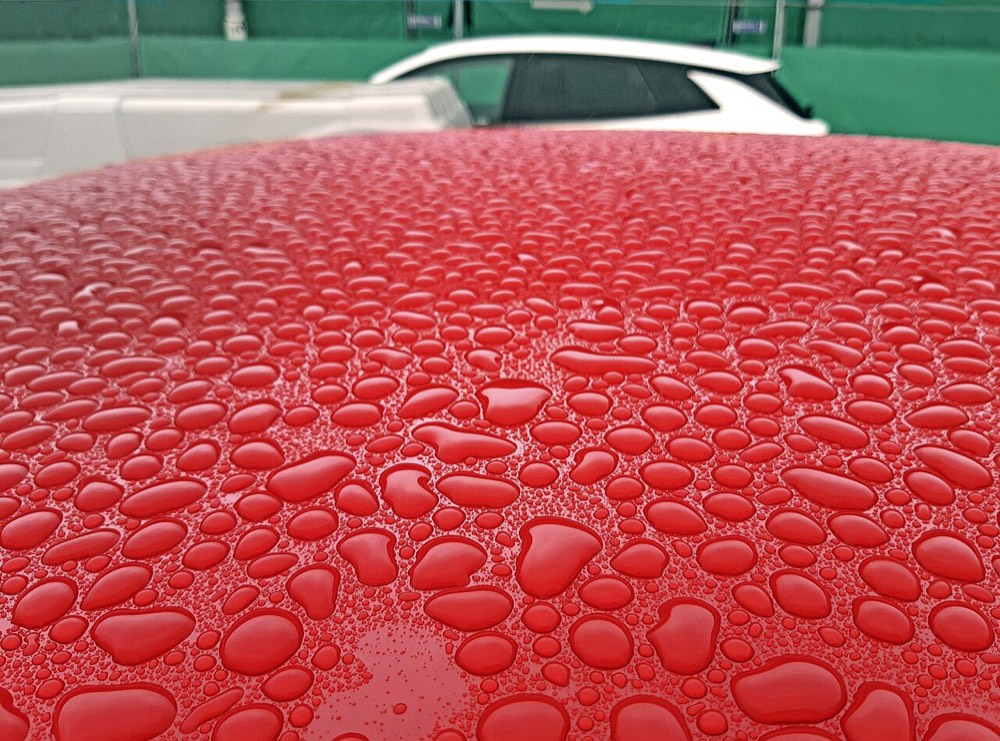
A coating bonds to the paint and cures into a hard, slick layer. Water beads and sheets off, dirt lets go more easily when you wash, and the gloss lasts much longer than wax.
| Protection | Wax | Spray sealant | Ceramic coating |
|---|---|---|---|
| Typical lifespan | Weeks | A few months | Years, with proper care |
| Washing | Normal | Easier | Much easier, dirt releases |
| Sun and road film | Light protection | Moderate | Strongest of the three |
| Paired with correction | Short term only | Okay | Locks in the result |
Ceramic coatings are quoted together with your correction, so you see both options and the combined price at once. Read more about ceramic coating in Denver. Not ready for a coating? Paint protection decontaminates the paint and seals it, a step up from spray protection and a step below ceramic.
Add your year, make and model. Handled comes to your home or workplace anywhere in the Denver Metro, so there's no drop-off and no waiting at a shop.
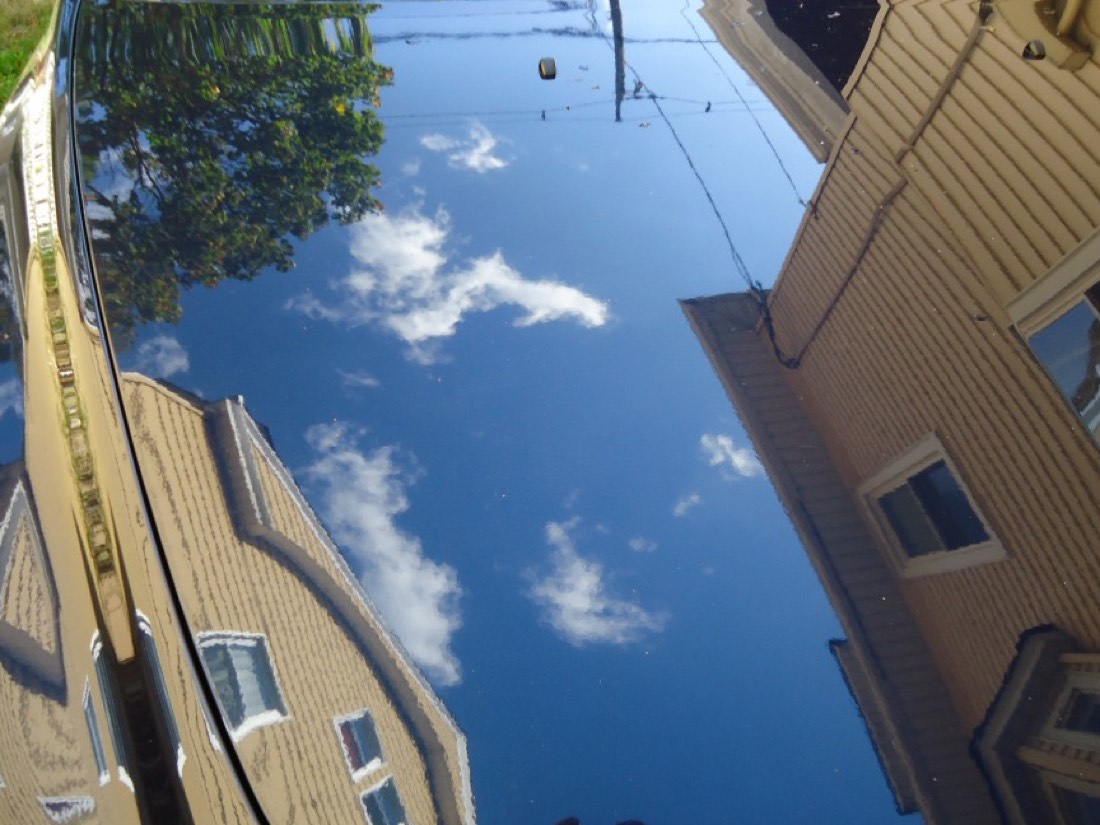
Photo credits: car hood reflection by Tomwsulcer (CC0, Wikimedia Commons). Water beading on red paint by Kotivalo (CC BY-SA 4.0, Wikimedia Commons). Panel and cross-section graphics are illustrations.
Mobile detailing that comes to you across the Denver Metro